Reviews NikeCourt Vapor Pro 3
Nike Vapor Pro 3 review: this is the hard-wearing Vapor of the range, with Hart rubber right up to the toe, 8.6/10 for durability and a price seen at around €117 in Belgium. For the player who slides on hard courts and wants a Nike that lasts the season.
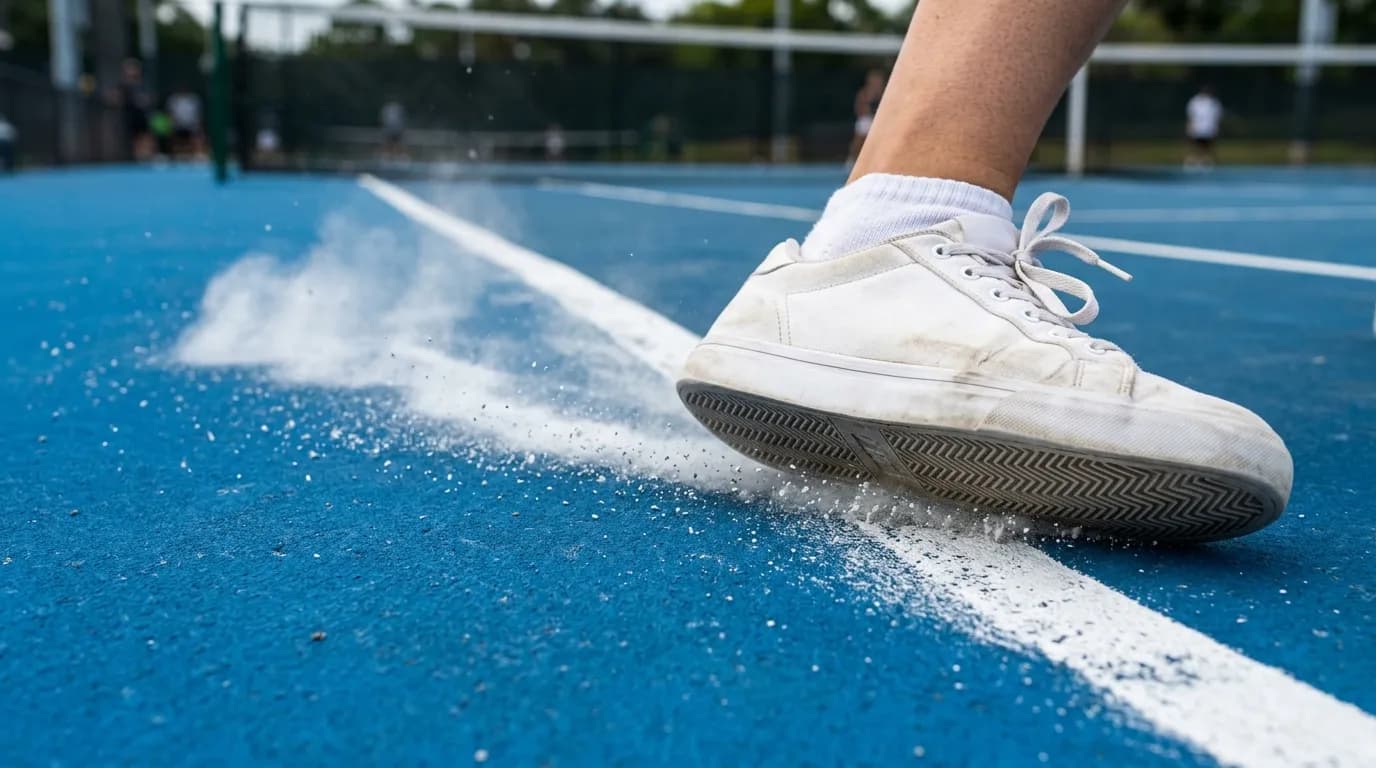
Verdict
The Vapor Pro 3 scores 9.0/10 because it keeps almost everything that makes a Vapor (grip 8.9, stability 8.8, foot close to the ground) and adds the rubber the Vapor 12 lost. RunRepeat calls its durability "fantastic", wear zones included, and the Hart rubber runs right up to the toe, where toe drag wears holes in outsoles. Its durability score, 8.6, is the same as the GP Challenge 1.5's, for a shoe 31 g lighter. The price of this compromise comes down to two points: a smaller Air Zoom unit in the forefoot, so less propulsion, and a weight of 425 g in a US 10.5, above average. For a regular player who wears out outsoles on hard courts or indoors, it is the most sensible Nike under €120; for a light, attacking player, the Vapor 12 remains livelier.
Best for : Hard-court sliders who want a hard-wearing Nike
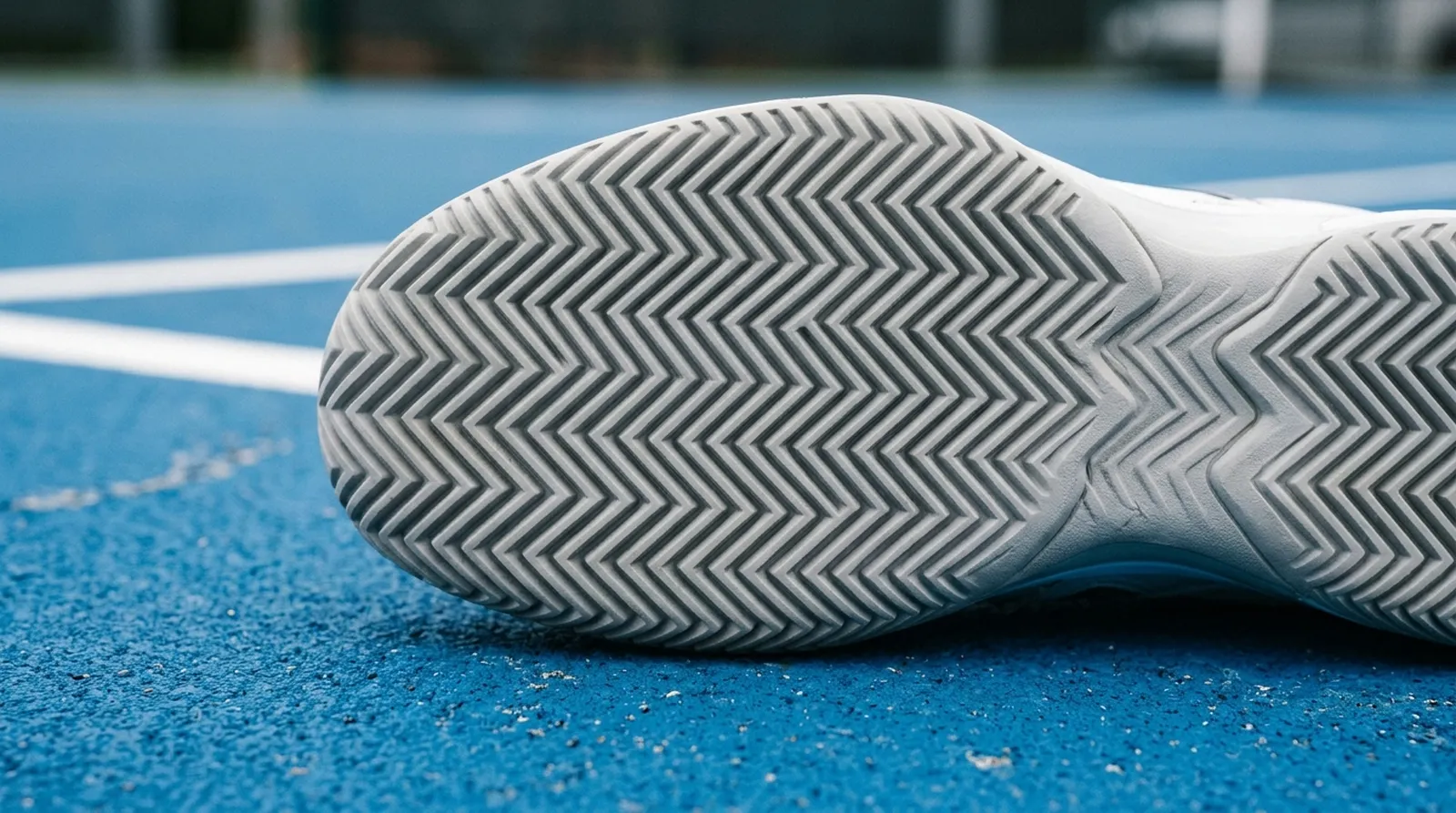
The Vapor Pro 3 has Hart rubber across the whole outsole and right up to the toe, and RunRepeat rates its durability as "fantastic", including in the wear zones. It scores 8.6/10 for durability on our grid, compared with 7.2 for the Vapor 12 and 9.4 for the Vapor Cage 4. No outsole warranty has been identified, either from Nike or from the retailers consulted; in Belgium, the 2-year legal guarantee covers defects, not normal wear. The cushioning ages at the usual rate: 45 to 60 hours of play before the midsole is worn out, according to the AAPSM. On crushed brick, the rubber will wear much more slowly than on hard courts.
Pros
- Hart rubber right up to the toe, durability rated "fantastic" by RunRepeat
- 8.6/10 for durability, on a par with the GP Challenge 1.5, for 31 g less
- Grip (8.9) and stability (8.8) close to those of the Vapor 12
- Around €40 cheaper than the Vapor 12 on average price seen in Belgium
- Hard-court and clay versions, for men and women
Cons
- Reduced Air Zoom unit in the forefoot: less propulsion than a Vapor 12
- 425 g in a US 10.5, heavier than the average speed shoe
- No outsole warranty identified
How long does the Nike Vapor Pro 3 outsole last?
Longer than that of most speed shoes, and that is the whole point of it. On the Vapor Pro 3, Nike kept a Hart rubber outsole that runs right up to the toe, whereas the Vapor 12, its big sister, was lightened by removing much of its rubber. RunRepeat's measurements rate its durability as "fantastic", including in the wear zones.
On our grid, it scores 8.6/10 for durability. That is the same score as the GP Challenge 1.5, the Nike for baseline hitters, and clearly more than the Vapor 12 (7.2). Only the Vapor Cage 4 does better in the range (9.4), but it is an older generation, mostly sold as end-of-line stock.
The toe matters as much as the outsole. On the serve, the back foot drags along the court, and for a right-hander it is the inside of the right shoe that suffers first (Tennis Server). Rubber that runs up to the tip of the foot delays the moment the toe cap wears through, which is often when the pair ends up in the bin.
Then there is the cushioning, which does not depend on the rubber. The AAPSM puts the end of a midsole's life at between 45 and 60 hours of tennis. At three hours a week, that makes four to five months. The Vapor Pro 3 often still has rubber left after that: it is the foam that decides when to replace it, not the tread.
No pair is judged without the lifespan of its outsole. This one has a good one, though without a written warranty.
Vapor Pro 3 or Vapor 12: what is the difference?
The Vapor 12 is faster, the Vapor Pro 3 lasts longer. Both share the same spirit, a low foot position and a responsive shoe, but they do not strike the same balance between weight and rubber.
In figures, on our grid: 8.6 for durability for the Pro 3 against 7.2 for the Vapor 12, 8.9 for grip against 9.4, 8.4 for comfort against 8.8, and the same stability (8.8). On weight, Tennis Warehouse records 425 g in a US 10.5 for the Pro 3 and 414 g for the 12, a gap of just 11 g. The drop goes from 9.9 mm to 8.6 mm.
The difference is mainly under the foot. The Vapor 12 has Air Zoom in the heel and lightened rubber; the Vapor Pro 3 has a smaller Air Zoom unit, in the forefoot, and full-length Hart rubber. The result: less propulsion for the Pro 3, but an outsole that holds up.
And the price. On the average seen in Belgium between June and September 2026, the Vapor Pro 3 sits at around €117, the Vapor 12 at around €159. For a player who plays more than three times a week on hard courts, the €40 difference buys lifespan rather than speed, and that is often the right trade. The comparison tool lines the two models up criterion by criterion.
Is the Vapor Pro 3's Air Zoom cushioning comfortable?
Decent, no more, and that is the main criticism you can make of it. Nike has placed an Air Zoom unit in the forefoot, smaller than on its premium models. RunRepeat notes weaker propulsion. On our grid, the Vapor Pro 3 scores 8.4 for comfort, against 8.8 for the Vapor 12 and 9.4 for the GP Challenge 1.5.
That figure mainly tells you who it is not for. A player with sore knees, who defends for two hours from the baseline or who wants a cushioned feel will be better off in a GP Challenge 1.5, with Air Zoom in the heel and forefoot and a TPU plate. The Vapor Pro 3 remains a speed shoe: firm, low, passing on what happens under the outsole.
The mesh and synthetic upper holds the foot well when pushing off, and its stability (8.8) is that of a Vapor 12. For a model at this weight and price, it is the right compromise.
A useful reminder for every model: the cushioning compresses before the rubber wears. After 45 to 60 hours of play (AAPSM), a Vapor Pro 3 can look almost new while cushioning much less. If your feet or ankles hurt more after a match, that is a warning sign cited by the USTA, even if the outsole still has tread.
Is the Vapor Pro 3 suited to Belgian crushed brick and indoor courts?
Yes for crushed brick, provided you get the right version. Nike offers the Vapor Pro 3 in a hard-court version and a clay version, with deeper herringbone that clears the clay. Belgian retailers sell the clay version: Tennis-Point.be lists it as a "gravelschoen", Zalando as a clay-court version.
It is the right surface for making the pair last. According to RTBF, more than eight courts in ten in Belgium are crushed brick, and clay wears the outsole far less than hard courts do, according to Tennis Companion. A Vapor Pro 3 worn in summer on your club's crushed brick will lose little rubber there.
Winter is another matter. Under a dome or indoors, on GreenSet, you need the hard-court version, and that is where its full-length Hart rubber justifies the choice: hard courts are the most abrasive surface. On carpet, however, neither version is suitable. Decathlon points out that you need a completely smooth, non-marking sole, otherwise the foot locks and the risk of a sprain increases.
Many Belgian players end up with two pairs, one per season. With the Vapor Pro 3, both versions exist, which makes the choice simpler.
Which player is the Nike Vapor Pro 3 made for?
For the regular player who slides on hard courts and wears out outsoles, without wanting to move to a heavy, very cushioned shoe. That is the profile the reviews single out: a hard-wearing Vapor, versatile across all surfaces, for less than a Vapor 12.
It is aimed first at the interclub competitor who plays three or four times a week and wears a hole in a Vapor 12 within a few months. It also suits the player who drags their back foot on the serve and wears out the toe before anything else, the club player who spends the winter under a dome or indoors on a hard surface, and anyone who wants a Nike speed shoe under €120.
It is less suited to the heavy, powerful player looking for cushioning: the GP Challenge 1.5, also at 8.6 for durability but 9.4 for comfort, will suit them better. The player who wears through every outsole will look at the Vapor Cage 4, rated 9.4 for durability, after first checking its availability in Belgium. And the light, attacking player who plays mostly in summer on crushed brick will get more out of the Vapor 12.
Outside Nike, the benchmarks are the Asics Gel-Resolution X (9.0 for durability, AHAR Plus rubber) and the Adidas Barricade 13 (9.0, Adiwear 2.0), two heavier and more stable shoes. To find where you fit in a few questions, the quiz points you to the right model.
How much does the Vapor Pro 3 cost in Belgium, and what is it worth per hour of play?
Around €117, on the average price seen in Belgium between June and September 2026. The Premium version, with different upper materials and colourways, is listed at €139.99 RRP at Tennis Warehouse Europe. You can find it at Tennis-Point.be, Passasports, Zalando and on nike.com/be, for men and women.
The price that counts is the price per hour of play. Based on 45 to 60 hours before the cushioning wears out (AAPSM), a Vapor Pro 3 at €117 works out at €1.95 to €2.60 per hour. A Vapor 12 at €159 costs €2.65 to €3.55 per hour on the same basis, and on top of that it risks wearing through its outsole first, for a player who slides on hard courts.
On the same basis, the GP Challenge 1.5 at €125 works out at €2.10 to €2.80 per hour, and the Asics Gel-Resolution X, seen at around €130, at €2.15 to €2.90. The Vapor Pro 3 is therefore the cheapest per hour of the durability-focused Nikes.
To pay less, aim for the summer sales, which start on 1 July in Belgium, or an end-of-season colourway. The durable tennis shoes ranking sets the Vapor Pro 3 against the models that last longest, and the Nike page covers the rest of the range.
Specs
| Weight | 425 g (men's US 10.5) |
|---|---|
| Drop | 8.6 mm |
| Outsole | Hart rubber across the whole outsole, right up to the toe |
| Outsole warranty | None |
| Cushioning | Air Zoom in the forefoot (smaller unit) |
| Upper | Mesh and synthetic |
| Courts | All courts, Clay |
| Fit | Standard, true to size in length. |
| Typical price | ≈ 117 € |
| Released | 2025 |
Frequently asked questions
Is the Nike Vapor Pro 3 worth it in 2026?
It is a model released in 2025, rated 9.0/10 in our editorial ratings, with 8.6/10 for durability. RunRepeat rates its durability as "fantastic". It remains one of the most hard-wearing Nikes sold under €120 in Belgium.
Is the Nike Vapor Pro 3 true to size?
Yes, its fit is standard: go for your usual size. Leave roughly a thumb's width between your longest toe and the end of the shoe, and try it on at the end of the day with your tennis socks.
Is there a clay version of the Vapor Pro 3?
Yes. Nike offers it in a clay version, sold in Belgium at Tennis-Point.be and Zalando, among others. That is the version to get for crushed brick, which covers more than eight Belgian courts in ten.
Does the Vapor Pro 3 have a 6-month outsole warranty?
No, no outsole warranty has been identified for this model. The 6-month warranty often cited is offered by the American retailer Tennis Warehouse, for other models such as the Vapor Cage 4. In Belgium, the 2-year legal guarantee covers defects, not wear.
Vapor Pro 3 or GP Challenge 1.5 for a player who wears out outsoles?
Both score 8.6/10 for durability. The Vapor Pro 3 is lighter (425 g against 456 g) and cheaper (€117 against €125 on average price seen); the GP Challenge 1.5 is far more comfortable (9.4 against 8.4). For speed: Vapor Pro 3; for cushioning and baseline play: GP Challenge 1.5.
How much does the Nike Vapor Pro 3 weigh?
Around 425 g in a men's US 10.5 according to Tennis Warehouse, or 15.0 oz. Its drop is 8.6 mm.
Sources
Editorial scores built from maker specs, published lab tests and player feedback.