Reviews Wilson Rush Pro Ace
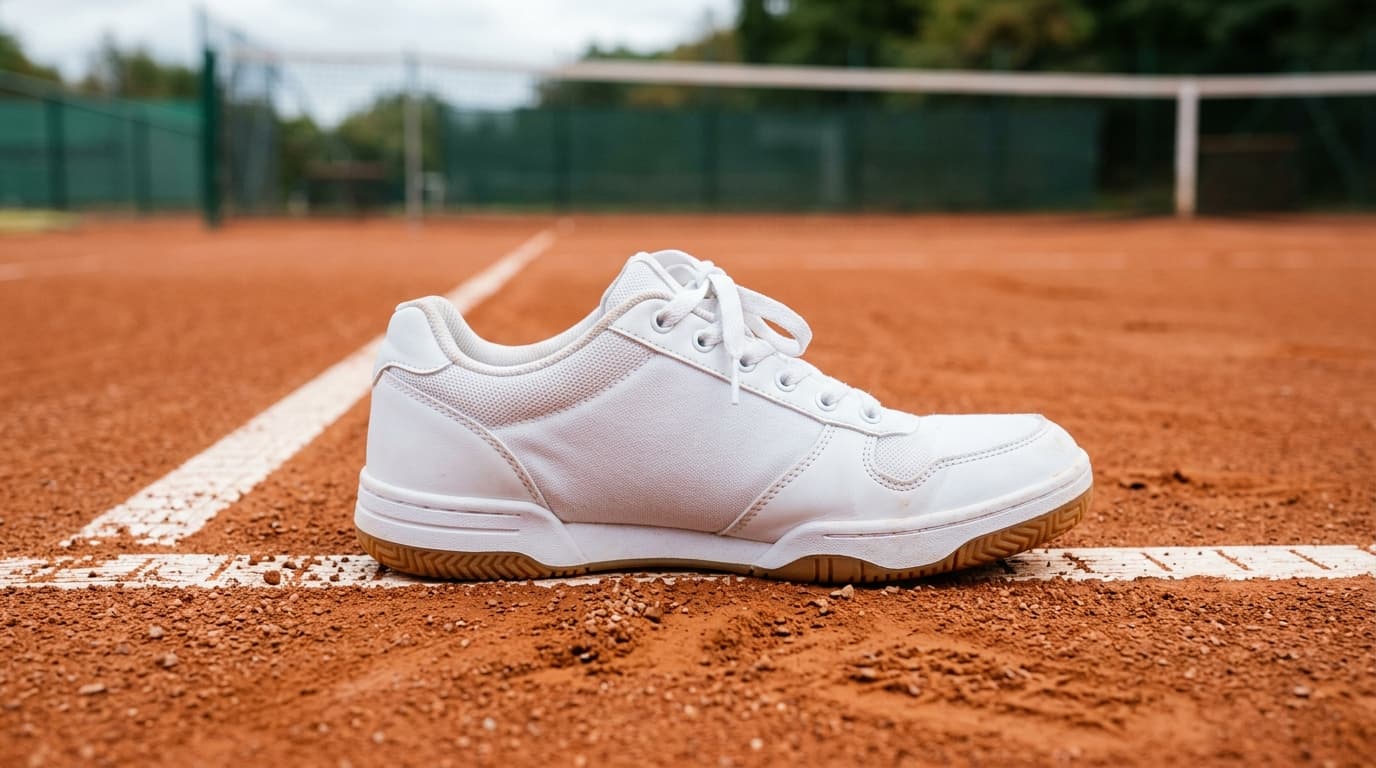
The Wilson Rush Pro Ace is the entry-level shoe of the Rush family: 349 g in men's US 10.5, Duralast rubber, a ventilated mesh upper, around €70 in Belgium. It scores 7.3/10 overall and 6.4/10 for durability, its lowest score.
Verdict
The Wilson Rush Pro Ace scores 7.3/10. Its selling point is weight: 349 g in men's US 10.5 according to Tennis Warehouse, which gives it 8.4/10 for lightness, the best score of the four Wilson shoes in our database. It uses the Duralast rubber of the Rush range under a ventilated mesh upper, for around €70 recorded in Belgium, or €1.15 to €1.55 per hour of play. The rest of the sheet is average: 7.6 for grip, 7.4 for comfort and for stability, with less support than a Rush Pro and cushioning that the sources do not document. Durability, at 6.4/10, is the weak point, with no outsole warranty identified. At the same price, the Nike Vapor Lite 3 does better on all five criteria (7.9/10 overall, 7.0 for durability), and the Nike Court Lite 4 beats it overall for €3 less. The Rush Pro Ace keeps a specific audience: the light club player, one to two hours a week on red clay, who wants a Wilson and a pair that weighs little.
Best for : Club player who wants a light, affordable Wilson
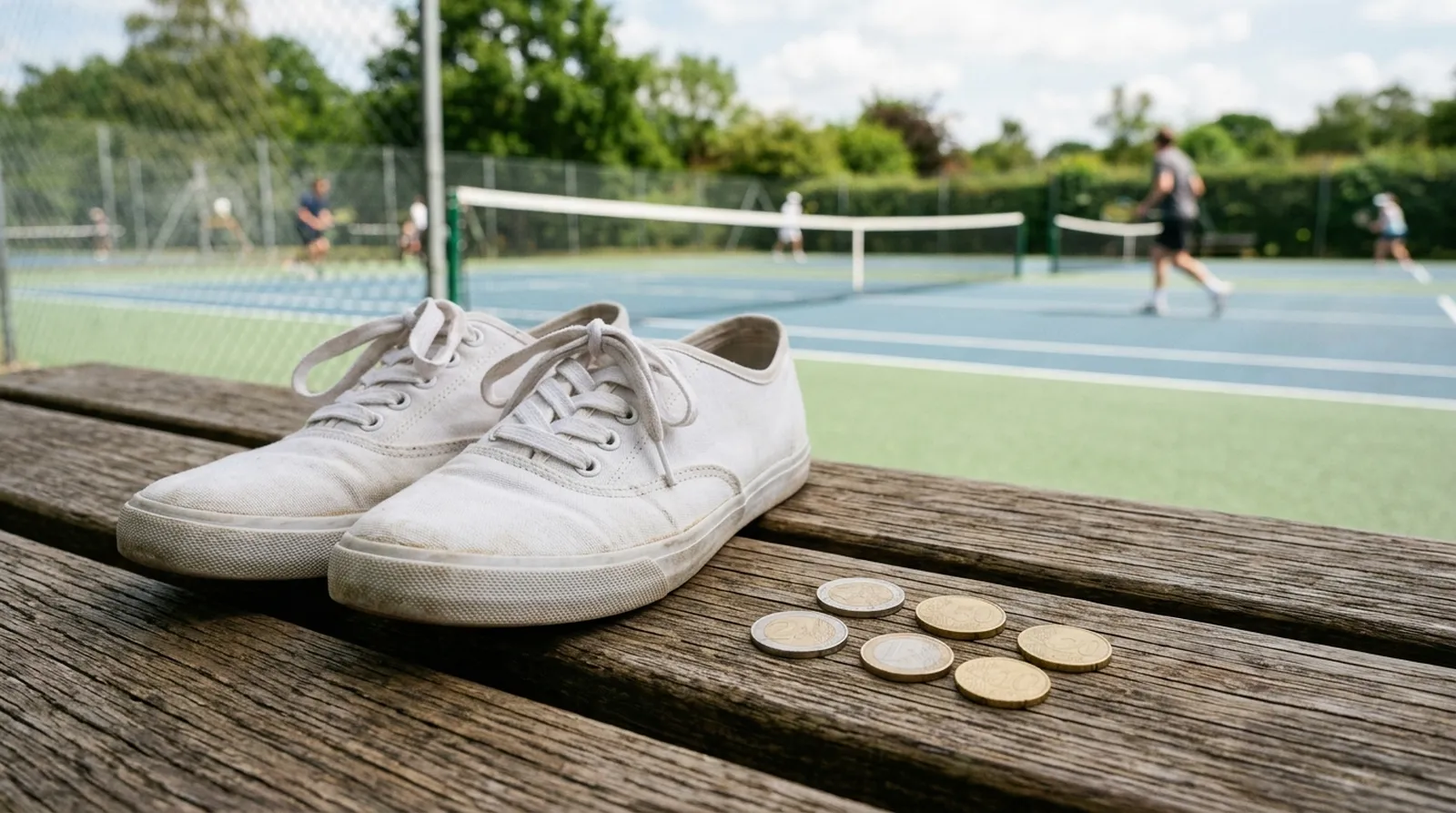
The Rush Pro Ace has a Duralast herringbone outsole, the rubber Tennis Warehouse presents as Wilson's most durable. Yet it scores only 6.4/10 for durability on our grid, against 7.4 for the Rush Pro 5 and 8.0 for the Rush Pro 4.5 and the Rush Tour 5. No wear test with figures has been published for this model. It weighs 349 g, and lightweight shoes generally last less long than stable, heavier models, Tennis Companion points out. At Nike, for the same price, the Vapor Lite 3 scores 7.0 and the Court Lite 4 scores 6.8. No outsole warranty has been identified, either from Wilson or from a retailer; in Belgium, the 2-year legal guarantee covers defects, not wear. Cushioning lasts 45 to 60 hours of play according to the AAPSM.
Pros
- 349 g in men's US 10.5 according to Tennis Warehouse: 8.4/10 for lightness, the best score of the four Wilson shoes in our database
- Duralast herringbone rubber, the one used across the whole Rush range
- Around €70 recorded in Belgium, or €1.15 to €1.55 per hour of play
- Ventilated mesh upper and standard fit, with no reported reservation about width
- Clay and all-court versions; sixth in our best-value ranking
Cons
- Durability of 6.4/10, the lowest score on its sheet, with no published wear test and no outsole warranty identified
- Less support than a Rush Pro (7.4/10 for stability); cushioning and drop not disclosed
- Beaten on all five criteria by the Nike Vapor Lite 3, sold at the same price
How long does the outsole of the Wilson Rush Pro Ace last?
No figure in hours has been published, and no wear test with figures either. On our grid, the Rush Pro Ace scores 6.4/10 for durability, the lowest score on its sheet.
On paper, the rubber is not the problem. The outsole is Duralast, in a herringbone pattern, like the rest of the Rush range. In its Rush Pro 4 review, Tennis Warehouse presents Duralast as Wilson's most durable rubber.
What changes is the shoe around it. The Rush Pro Ace weighs 349 g in men's US 10.5, according to the Tennis Warehouse listing. That is 59 g less than a Rush Pro 5 in the same size. And lightweight shoes generally last less long than stable, heavier models, Tennis Companion points out.
No pair is judged without the lifespan of its outsole. That of the Rush Pro Ace puts it at the bottom of its own brand: 6.4 against 7.4 for the Rush Pro 5, and 8.0 for the Rush Pro 4.5 and the Rush Tour 5.
There is no safety net. The model is not among those the US retailer Tennis Warehouse covers for 6 months, and no outsole warranty in Wilson's name has been identified.
The cushioning, for its part, follows the common rule. The AAPSM, the American Academy of Podiatric Sports Medicine, places midsole wear at 45 to 60 hours of tennis. At an hour and a half a week, that is 30 to 40 weeks.
For a recreational player on red clay, the rubber has a good chance of reaching that point. On hard courts, at three sessions a week, it is less certain. Check the tread under the inner forefoot once a month: that is the area that wears smooth first.
How good is the Wilson Rush Pro Ace in 2026?
It is a light, inexpensive club shoe, rated 7.3/10 overall: 8.4 for lightness, 7.6 for grip, 7.4 for comfort, 7.4 for stability and 6.4 for durability.
Only one score goes above 8. The profile is clear: the Rush Pro Ace is built to weigh little and cost little, not to dominate one playing criterion.
The spec sheet fits in four lines. A Duralast herringbone outsole. A ventilated mesh upper. A standard fit. 349 g in men's US 10.5. The rest is missing: the cushioning is not documented in the sources consulted, nor is the drop, and the release year is not disclosed.
That silence on cushioning matters. For a Rush Pro 4.5, the Tennis Warehouse listing details the Energy Cell, the RDST+ foam, the Propulsion Plate and the 4D Support chassis. Nothing of the kind is described for the Rush Pro Ace, and its support is lower than that of a Rush Pro. Its 7.4/10 for stability reflects this: a full point below the Rush Pro 4.5.
It appears once in our rankings. It is sixth in the best-value ranking, where two Nike shoes, the Court Lite 4 and the Vapor Lite 3, hold the top two places. It is in neither the beginners ranking nor the overall ranking.
Who is it for? The light player who plays once or twice a week, does not slide and does not drag the toe on the serve. Not the heavy player, nor the one who trains four times a week on hard courts: they will soon miss the stability and the rubber.
The Wilson page places the model within the Rush range.
Rush Pro Ace or Nike Vapor Lite 3, Court Lite 4: which €70 shoe should you choose?
The Nike Vapor Lite 3. At the same price, around €70 in Belgium, it beats the Rush Pro Ace on all five criteria of our grid.
In detail: 7.9/10 overall against 7.3. Durability 7.0 against 6.4. Grip 8.2 against 7.6. Stability 7.8 against 7.4. Comfort 7.6 against 7.4. Lightness 8.6 against 8.4, even though the weight of the Nike is not disclosed.
The Vapor Lite 3 has a published review on its side. RunRepeat lists it among the best deals under $100 and finds its upper and outsole durable for the price. Nike has fitted a new rubber compound, on the outsole and on the toe. Its limit: RunRepeat does not recommend it for wide feet.
That is where the Wilson regains some ground. Its fit is given as standard, with no reservation about width. If the Vapor Lite 3 feels tight when you try it on, the Rush Pro Ace is an honest fallback.
The Nike Court Lite 4 is the third option, at around €67. It scores 7.5/10 overall, 6.8 for durability, 7.8 for grip and 7.6 for stability, with a Zoom Air unit and EVA foam according to the Tennis Warehouse listing. The Wilson only beats it on lightness, 8.4 against 7.8. Mind the surface: the Court Lite 4 is listed in an all-court version only, while the Rush Pro Ace and the Vapor Lite 3 exist in a clay version.
My order at €70. The Vapor Lite 3 first. The Court Lite 4 for the occasional player who stays on hard courts. The Rush Pro Ace if you want a Wilson, if the Nike feels tight or if weight comes first.
The guide to tennis shoes for beginners compares the models in this price range, and the comparison tool lines them up criterion by criterion.
Rush Pro Ace, Rush Pro 4.5 or Rush Pro 5: which Wilson should you choose?
The Rush Pro 4.5 if you can spend €25 more, the Rush Pro Ace if the budget stops at €70.
Three Wilson shoes share the bottom and the middle of the range, and their scores step up with their average prices recorded in Belgium between June and September 2026.
The Rush Pro Ace, around €70: 7.3/10 overall, 6.4 for durability, 7.4 for stability, 349 g.
The Rush Pro 4.5, around €95: 8.1/10 overall, 8.0 for durability, 8.4 for stability. It is the previous generation, sold as an end-of-line model, and the best deal of the three as long as your size exists.
The Rush Pro 5, around €107: 8.3/10 overall, 7.4 for durability, 8.6 for stability, 408 g in men's US 10.5. It is the current model, with three outsoles in the catalogue.
Between the Ace and the 4.5, the gap is the widest in the range: 1.6 points for durability and 1.0 point for stability for €25. Per hour of play, the 4.5 works out at €1.60 to €2.10 against €1.15 to €1.55 for the Ace. That is 45 to 55 cents more per hour for a shoe that holds the foot better and whose rubber copes with hard courts.
The Ace keeps two advantages. It weighs 59 g less than the Rush Pro 5 in the same size. And it costs €25 to €37 less than its two bigger sisters.
Above them, the Rush Tour 5 plays in another category: around €140, 434 g, 8.0/10 for durability.
My reading. You play more than two hours a week, or you are heavy: the 4.5. You play on Sunday mornings on red clay from April to September: the Ace is enough.
Rush Pro Ace Clay or AC: which version for red clay?
The Clay version for the Belgian summer, the AC (all court) version for hard courts. Neither suits carpet.
More than eight Belgian courts out of ten are red clay according to the RTBF. The Clay version is therefore the one you will use most. According to the HEAD guide, a clay outsole has deep herringbone along its full length, which clears the clay, whereas an all-court outsole makes do with modified herringbone, more rounded and shallower.
Both versions can be found in Europe. The listing recorded at Tennis-Point.be is a men's Rush Pro Ace for clay. Tennis Warehouse Europe lists the AC version. The Decathlon.be and bol.com listings do not state the surface in their title: read the description before ordering.
The surface decides what the 6.4/10 score is worth. Clay wears rubber far less than hard courts. On red clay, the Duralast of the Rush Pro Ace has a good chance of outliving the cushioning, and the pair will end through the foam, after 45 to 60 hours. It is the surface where its weak point weighs least.
On hard courts, it weighs most. Indoors on GreenSet or under a bubble, the rubber works at every stop, and a 349 g shoe rated 6.4 is not made for a winter of three sessions a week.
On carpet, the question does not arise. You need a completely smooth, non-marking outsole, Decathlon Belgium points out: too much tread blocks the foot and raises the risk of a sprain.
The most sensible split for a Belgian recreational player: the Rush Pro Ace Clay from April to September, then a more durable pair or a smooth outsole for winter, depending on the surface of your hall. The article on wear on clay and on hard courts puts figures on the gap between the two surfaces.
How much does the Wilson Rush Pro Ace cost in Belgium, and what is the cost per hour of play?
Around €70 as an average price recorded in Belgium between June and September 2026. A price of €79.90 has been recorded in Europe; Wilson's official price is not disclosed.
The price that matters is the price per hour of play. On the basis of 45 to 60 hours before the cushioning wears out, a Rush Pro Ace at €70 works out at €1.15 to €1.55 per hour. At €79.90, €1.35 to €1.80.
It is one of the lowest calculations in our database. The Nike Vapor Lite 3 is at the same level, €1.15 to €1.55, with a better-rated outsole. The Nike Court Lite 4, at €67, goes down to €1.10 to €1.50.
This calculation assumes the rubber lasts as long as the cushioning. Take, as a hypothesis, a Rush Pro Ace whose outsole is smooth after 35 hours on hard courts: it then works out at €2.00 per hour. At that rate, a Rush Pro 4.5 at €95 that goes the full 45 to 60 hours costs no more, €1.60 to €2.10. A €70 shoe is only a bargain if you wear it out through the foam.
Is a €70 pair better than a €160 pair? At one or two hours a week on red clay, the €70 pair. A Nike Vapor 12 at €159 works out at €2.65 to €3.55 per hour: it buys grip and stability, not extra hours, since the cushioning wears at the same pace. The article on the cost per hour of play details the method.
Where can you find it? The retailer listings recorded in Belgium are at Tennis-Point.be, Decathlon.be and bol.com. Promotions can appear there all year round, Test-Achats points out, and not only in January and July.
No wear warranty comes on top of that price. The 6-month warranty of Tennis Warehouse concerns other models, for purchases made in the United States, and Tennis Warehouse Europe does not offer it. In Belgium, the 2-year legal guarantee covers a defect, such as an outsole coming unglued, not rubber worn by play.
Specs
| Weight | 349 g (Men's US 10.5 according to Tennis Warehouse (12.3 oz)) |
|---|---|
| Drop | not disclosed |
| Outsole | Duralast herringbone rubber |
| Outsole warranty | None |
| Cushioning | Not disclosed |
| Upper | Ventilated mesh |
| Courts | All courts, Clay |
| Fit | Standard. |
| Typical price | ≈ 70 € |
Frequently asked questions
How good is the Wilson Rush Pro Ace in 2026?
It is a light club shoe rated 7.3/10: 8.4/10 for lightness at 349 g in men's US 10.5, 7.6 for grip, 7.4 for comfort and for stability, 6.4 for durability. It costs around €70 in Belgium, or €1.15 to €1.55 per hour of play.
Wilson Rush Pro Ace: which player is it for?
For the light club player who plays once or twice a week, mostly on red clay, and wants an affordable Wilson. Heavy players, or those who play a lot on hard courts, will do better with the Rush Pro 4.5 (8.0/10 for durability, around €95) or the Nike GP Challenge Pro (8.2/10, around €97).
Is there a Wilson Rush Pro Ace Clay for clay courts?
Yes. The model exists in a Clay version and in an AC, all-court version. The listing recorded at Tennis-Point.be is a men's clay version. On red clay, the rubber wears little and the cushioning lasts 45 to 60 hours.
Rush Pro Ace or Nike Vapor Lite 3: which one to choose at €70?
The Nike Vapor Lite 3, which beats it on all five criteria: 7.9/10 overall against 7.3, and 7.0 against 6.4 for durability. The Rush Pro Ace remains an option if the Nike, which RunRepeat does not recommend for wide feet, feels tight when you try it on.
Is a €70 pair of tennis shoes better value than a €160 pair?
At one or two hours a week on red clay, a €70 pair is enough: €1.15 to €1.55 per hour for the Rush Pro Ace, against €2.65 to €3.55 for a Nike Vapor 12 at €159. The cushioning wears at the same pace, in 45 to 60 hours. The expensive model is justified by grip and stability.
Does the Wilson Rush Pro Ace have a 6-month outsole warranty?
No, none has been identified. It is not among the Wilson models the US retailer Tennis Warehouse covers for 6 months, a warranty tied to a purchase made from it. In Belgium, the 2-year legal guarantee covers defects, not wear.
Sources
- Tennis Warehouse, Wilson Rush Pro Ace listing
- Tennis Warehouse Europe, Wilson Rush Pro Ace AC
- Tennis Warehouse, Wilson Rush Pro 4 review
- Tennis Warehouse, Wilson Rush Pro 4.5 listing
- Tennis Companion, lightweight tennis shoes
- AAPSM, when to replace athletic shoes
- RunRepeat, Nike Vapor Lite 3
- Tennis Warehouse, Nike Court Lite 4 listing
- HEAD, clay court tennis shoes guide
- RTBF, clay at the heart of Belgian tennis
- Decathlon Belgium, men's tennis shoes
- Test-Achats, sales all year round in Belgium
- Tennis Warehouse, 6-month outsole warranty
- Tennis Warehouse Europe, warranties
Editorial scores built from maker specs, published lab tests and player feedback.