Care & repair
How to Care for Tennis Shoes: Washing, Drying, Rest
Caring for tennis shoes takes 5 habits: hand washing, newspaper drying, 48 hours of rest between sessions. And never the washing machine. Here is why.
Contents · 11 sections
- Key takeaways
- What do you really gain by caring for your tennis shoes?
- Can you put tennis shoes in the washing machine?
- How do you dry wet tennis shoes?
- Why give your pair 48 hours of rest?
- Should you clean your outsoles after playing on clay?
- What should you check once a month?
- Is care enough to make a pair last?
- Sources
- FAQ
- Related articles
Caring for tennis shoes comes down to five habits: brush them after the match, wash them by hand, dry them with newspaper, give them 48 hours of rest and inspect them once a month. None takes more than five minutes. And the first reflex to drop is the most common one: the washing machine.
One honest note before going further. Care does not lengthen the life of a foam. It stops you shortening it.
What do you really gain by caring for your tennis shoes?
The hours the pair already owes you. The AAPSM, the American Academy of Podiatric Sports Medicine, considers a tennis shoe's midsole worn out after 45 to 60 hours of play, and the USTA uses the same range. No brush moves that ceiling.
What care changes is your chance of reaching it. A pair that is machine washed or dried on a radiator can be finished before its 45 hours: Asics lists both among the things that shorten the life of a sports shoe. The AAPSM adds an age limit: materials dry out and break down even when unused, and an athletic shoe more than a year old should be replaced, worn or not.
For someone playing one hour a week, age decides, not wear. For someone playing four hours a week, the foam is flattened in 11 to 15 weeks, and playing again before it has regained its thickness means playing on reduced cushioning. The two profiles do not have the same care to do. The first mostly needs to store the pair properly. The second mostly needs to let it rest.
The article on how long tennis shoes last works through the calculation for your playing schedule.
Can you put tennis shoes in the washing machine?
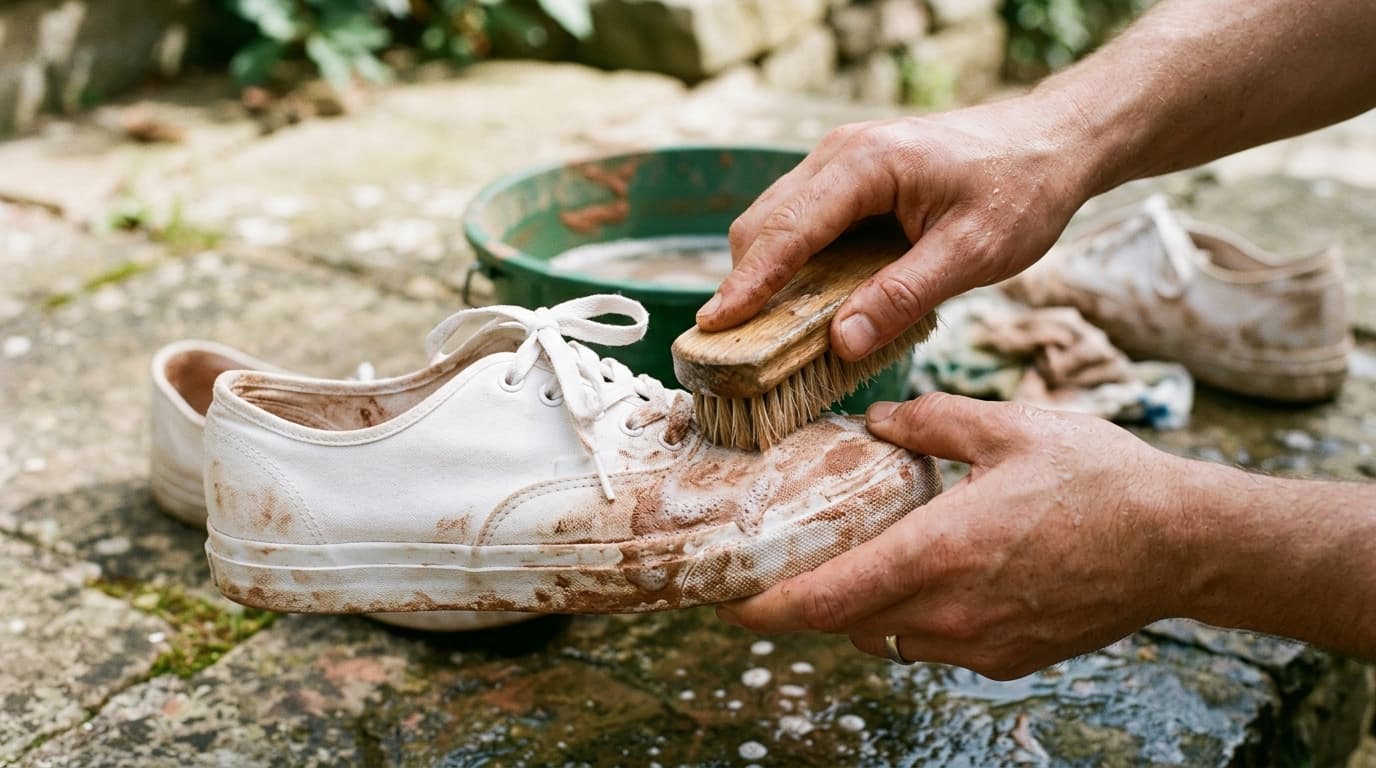
No. In its care guide, Asics says it plainly: the washing machine shortens the life of a sports shoe. The brand recommends washing by hand, with a soft brush.
The method has four steps:
- remove the insole;
- dry brush to knock off dust and clay;
- wash the upper by hand, with a soft brush;
- move on to drying, without heat.
On, the Swiss brand, publishes its own guide to washing tennis shoes: two manufacturers take the trouble to explain how to do it, which says enough about how often the question comes up.
The mesh uppers on recent models, such as the high-density mesh of the Nike Vapor 12, brush clean easily. They do not need a 30-degree cycle.
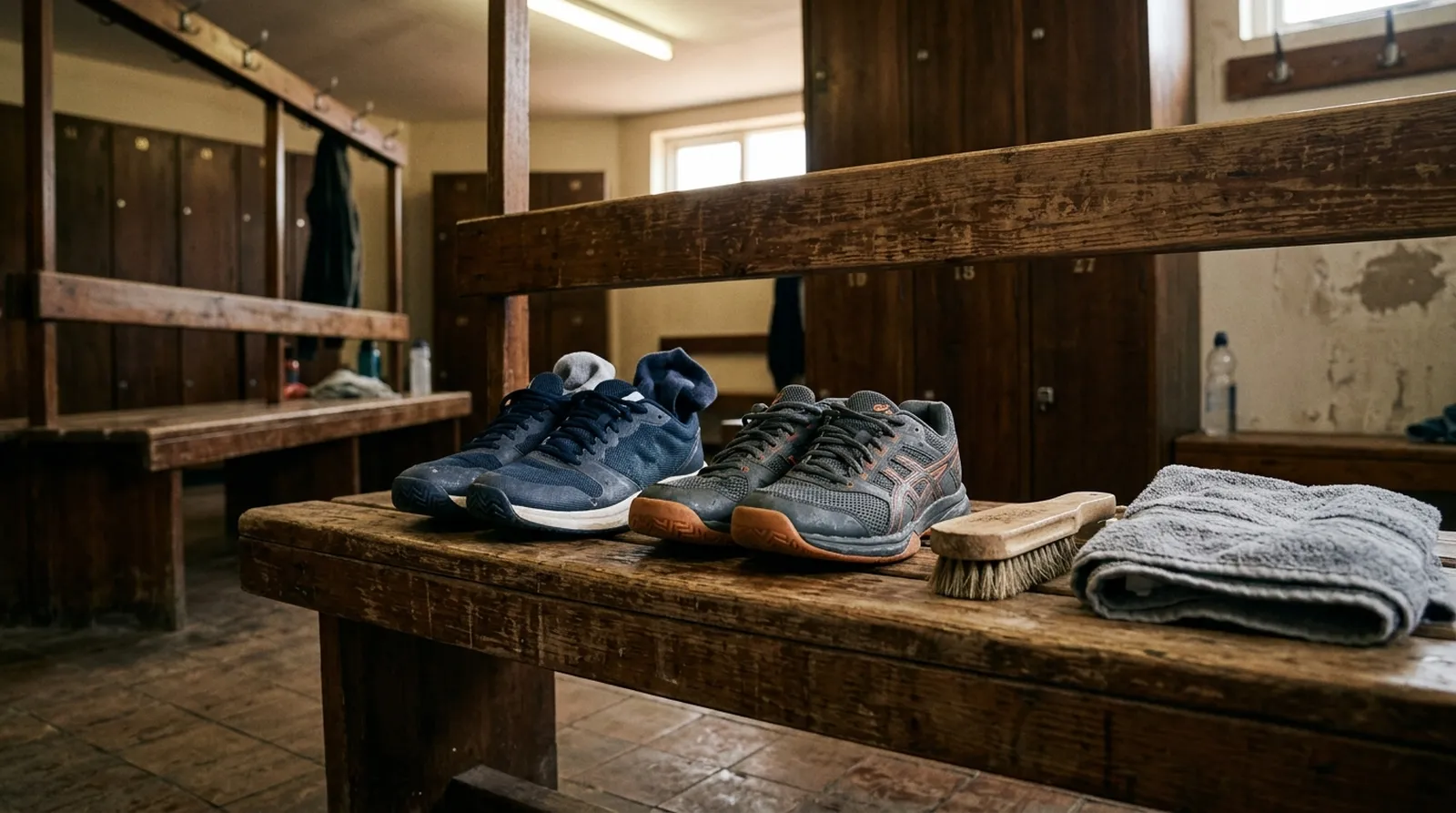
How do you dry wet tennis shoes?
With newspaper, and without heat. Asics gives the procedure: remove the insole, stuff the shoe with newspaper and replace it after about ten minutes, once it has soaked up most of the water. Then let the shoe air dry.
This is the habit that matters most in Belgium. An interclub match finished in a downpour, a clay court watered before play, a closed bag left in the boot until the next day: the pair spends the night wet. That is the scenario newspaper is there to prevent.
Three rules are enough. Take the shoes out of the bag when you get home. Never put them on a radiator. And do not play again in a pair that is still damp.
Why give your pair 48 hours of rest?
Because foam takes about 48 hours to decompress after intense exercise. That is Asics' argument for rotating two pairs, and it applies to every brand: playing again the next day means playing on cushioning that has not regained its thickness.
At one or two sessions a week, the question does not arise: the pair has time. It arises from three sessions upwards, and for interclub players who go from Thursday training to a Saturday match.
Two pairs do not cost more per hour. They share the same hours of play, and each one ages more slowly. The calculation is set out in the article on cost per hour of play: a Nike GP Challenge 1.5 found at around €125 in Belgium works out at €2.10 to €2.80 per hour, whether it is your only pair or one of two.
Should you clean your outsoles after playing on clay?
Yes, dry, before you leave the club. More than eight courts in ten are crushed-brick clay in Belgium, according to RTBF, and shoes made for that surface have deep herringbone tread across the whole outsole, designed to clear the clay, as HEAD explains. Clogged herringbone can no longer do that job.
Knock the soles together, then run a brush through the grooves. On the upper, dry brush before washing.
Clay has one advantage. According to Tennis Companion, hard courts are very abrasive and call for a tougher outsole, while clay wears the rubber far less. On clay, care therefore mostly protects the upper and the cushioning. On hard courts, it is the rubber that goes, and no brush grows it back: the article on clay versus hard court wear compares the two.
That leaves the walk to the court. No source puts a figure on what crossing the car park in tennis shoes costs, but tarmac is a hard surface like any other. Putting your pair on at the side of the court costs nothing.
What should you check once a month?
Three things, based on the wear signs listed by the AAPSM, the USTA and a US prevention guide that recommends this monthly check: the tread on the outsole, the state of the foam and the seams between upper and sole.
| What to check | Warning sign | What to do |
|---|---|---|
| Outsole | smooth patches, exposed foam, a difference between left and right foot | replace if the foam is visible |
| Midsole | deep creases, a shoe that tilts when placed flat | replace: the cushioning is flattened |
| Heel counter | both sides touch when you pinch the back | replace: the foot is no longer held |
| Upper-to-sole join | a seam or bond coming apart | keep an eye on it; replace if the upper detaches |
| Insole | flattened, misshapen | change it on its own: a standard insole lasts 1 to 2 years |
| Toe | rubber scraped away on the big-toe side | watch it if you drag your foot on serve |
The last row mostly concerns servers. For a right-hander, the inside of the right shoe wears first, because the back foot drags across the court. Models protected in that spot, such as the Nike GP Challenge 1.5 with its rubber drag guard on the inside of the toe, cope better; the article on tennis shoes for toe draggers compares them.
The USTA adds two signals that no visual check replaces: a shoe that no longer squeaks on hard courts, and feet or ankles that ache more after the match.
Is care enough to make a pair last?
No, and that is the limit of the exercise. Care preserves what the shoe starts with; it adds nothing.
A well cared for Nike Vapor 12 is still a shoe from which Nike removed much of the rubber to save weight, according to the Tennis Warehouse review: 7.2/10 for durability in our ratings, compiled from published tests. A GP Challenge 1.5, with high-abrasion rubber that is denser under the inner forefoot, scores 8.6. Newspaper does not close that gap.
So the choice of model weighs more than the habits. A heavy player, or one who slides on hard courts, gains more from changing shoes than from brushing them better. The durable tennis shoe ranking lists the eight models that last longest, and the Nike Vapor 12 review explains which player its lightness suits.
When the pair reaches the end of its life, Decathlon Belgium takes back shoes of any brand in 33 of its 35 stores. The Nike page presents the full range, and the overall ranking places each model.
Sources
- AAPSM, When to replace athletic shoes
- USTA, when is it time to buy a new pair of tennis shoes
- ASICS, 7 shoe care tips to make your shoes last longer
- On, how to wash tennis shoes
- Blue Cross Blue Shield of Massachusetts, checking your athletic shoes
- Foot.it, shoe wear pattern guide
- Tennis Server, shoe wear and toe drag
- Tennis Companion, clay court tennis shoes
- HEAD, clay court tennis shoes
- RTBF, clay at the heart of Belgian tennis
- Tennis Warehouse, Nike Zoom Vapor 12 review
- Tennis Warehouse, Nike GP Challenge 1.5 product page
- Neo G, orthotic insoles
- Decathlon Belgium, recycling sports gear
Your questions
Frequently asked questions
Can you put tennis shoes in the washing machine?
No. Asics states in its care guide that machine washing shortens the life of a sports shoe. Wash by hand with a soft brush, after removing the insole. The same source rules out direct heat for drying, which means no radiator and no tumble dryer.
How do you dry wet tennis shoes?
Remove the insole, stuff each shoe with newspaper and replace it after about ten minutes, as Asics advises. Then let them air dry, away from a radiator or direct sunlight. Allow about 48 hours before playing in the same pair again.
How long does a well cared for pair of tennis shoes last?
The cushioning lasts 45 to 60 hours of play according to the AAPSM, with or without care, and a shoe more than a year old should be replaced even if lightly used. Care is what gets you to those hours: a pair stored damp or machine washed can be finished sooner.
Which tennis shoes last longest on hard courts?
In our ratings, the Nike Air Zoom Vapor Cage 4 (9.4/10 for durability, check availability in Belgium), then the Asics Gel-Resolution X and the Adidas Barricade 13 (9.0). Among current Nikes, the GP Challenge 1.5 and the Vapor Pro 3 score 8.6. No amount of care turns a slimmed-down outsole into a durable one.
Do you need two pairs of tennis shoes?
Yes if you play more than twice a week. Asics points out that foam takes about 48 hours to decompress after intense exercise. In Belgium, clay in summer and indoor courts in winter push you towards two pairs anyway, one per surface.