Courts & play
Summer and Winter Tennis Shoes: Do You Need Two Pairs?
Summer and winter tennis shoes: in Belgium, yes once winter is played on carpet. Which outsole per surface, and a duo from €1.30 per hour of play.
Contents · 12 sections
- Key takeaways
- Do you really need two pairs of tennis shoes in Belgium?
- Which outsole for which surface?
- Do two pairs last longer than a single one?
- Which shoes for summer on red clay?
- Which shoes for winter indoors?
- Which tennis shoes last longest on hard courts?
- How much do two pairs cost, per hour of play?
- How do you store the pair that is waiting for next season?
- Sources
- FAQ
- Related articles
For your tennis shoes, summer and winter do not call for the same outsole in Belgium. If you play on red clay in summer and on carpet in winter, you need two pairs: the first has deep herringbone, the second must be fully smooth. If your indoor court is GreenSet, a single pair can get you by, but two last longer.
The extra cost is lower than it looks. Sometimes it is zero.
Do you really need two pairs of tennis shoes in Belgium?
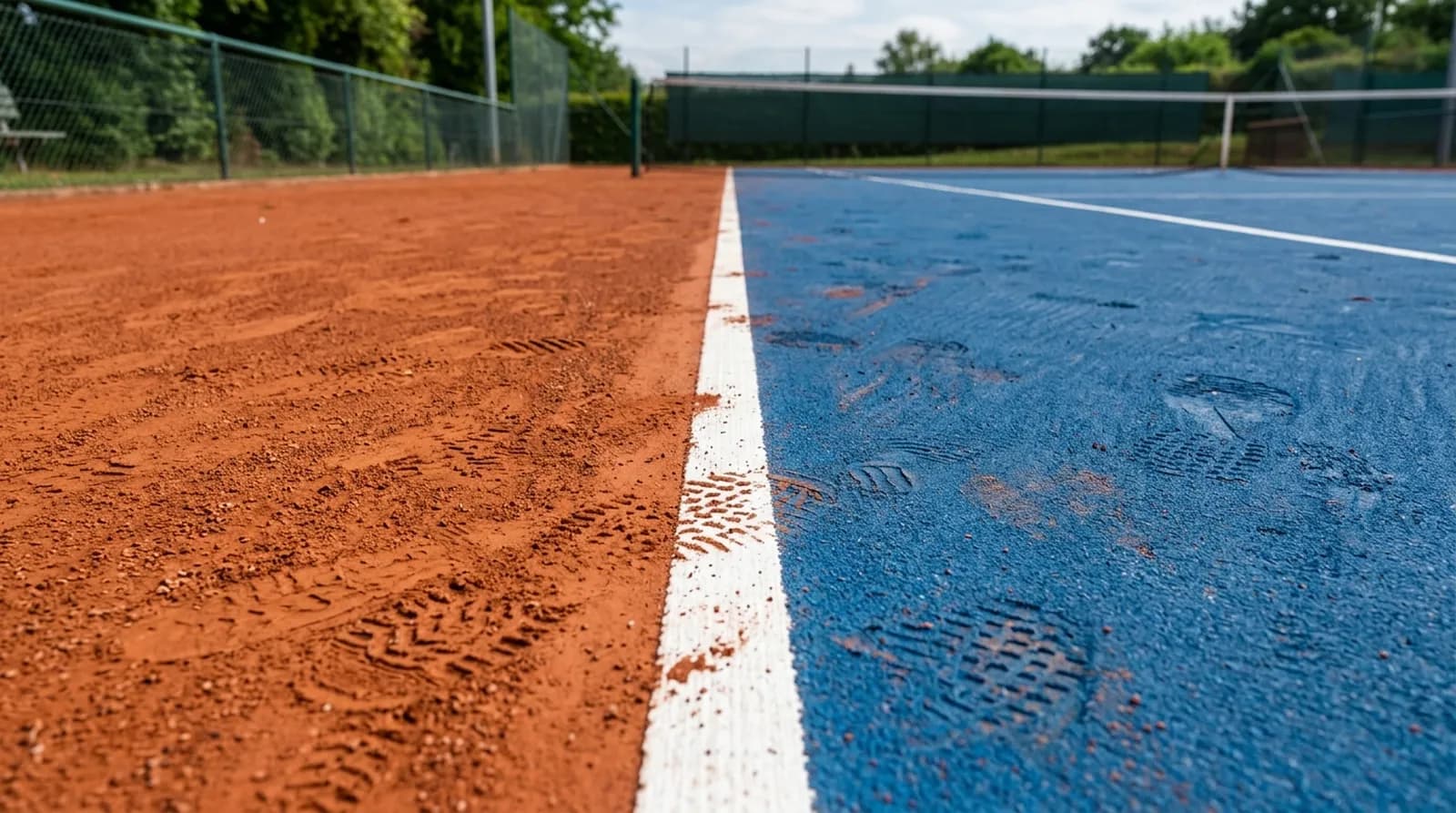
Yes for most interclub players, because the Belgian season is played on two surfaces that have nothing in common. More than eight courts out of ten are red clay, against 16% in France, according to RTBF. Because of the climate, clubs keep this surface mostly for the summer.
In winter, clubs play under a dome or indoors, for example on GreenSet or on carpet with rubber granules. GreenSet is a hard, abrasive surface. Carpet is a fast surface, which the ITF classes among the fastest along with grass.
There are three cases.
Your winter is played on carpet: two pairs, no discussion. A herringbone outsole has no place on this surface, which requires a smooth, non-marking outsole.
Your winter is played on GreenSet: an all-court pair can cover the year, at the cost of weaker grip in summer. Two pairs remain preferable once you play more than two hours a week.
You play outdoors all year on red clay or on artificial grass: one surface, one outsole. This does not concern you.
Which outsole for which surface?
Deep herringbone on red clay, modified herringbone on hard courts, a smooth outsole on carpet, small nubs on sand-filled artificial grass.
| Surface | Typical season in Belgium | Suitable outsole | What wears out first |
|---|---|---|---|
| Red clay | summer | deep herringbone along the whole length | the cushioning, after 45 to 60 hours |
| GreenSet, hard court | winter, under a dome or indoors | modified herringbone, durable rubber | the forefoot rubber and the toe |
| Carpet | winter, indoors | fully smooth, non-marking | the cushioning |
| Sand-filled artificial grass | all year | small nubs (omni outsole) | the cushioning |
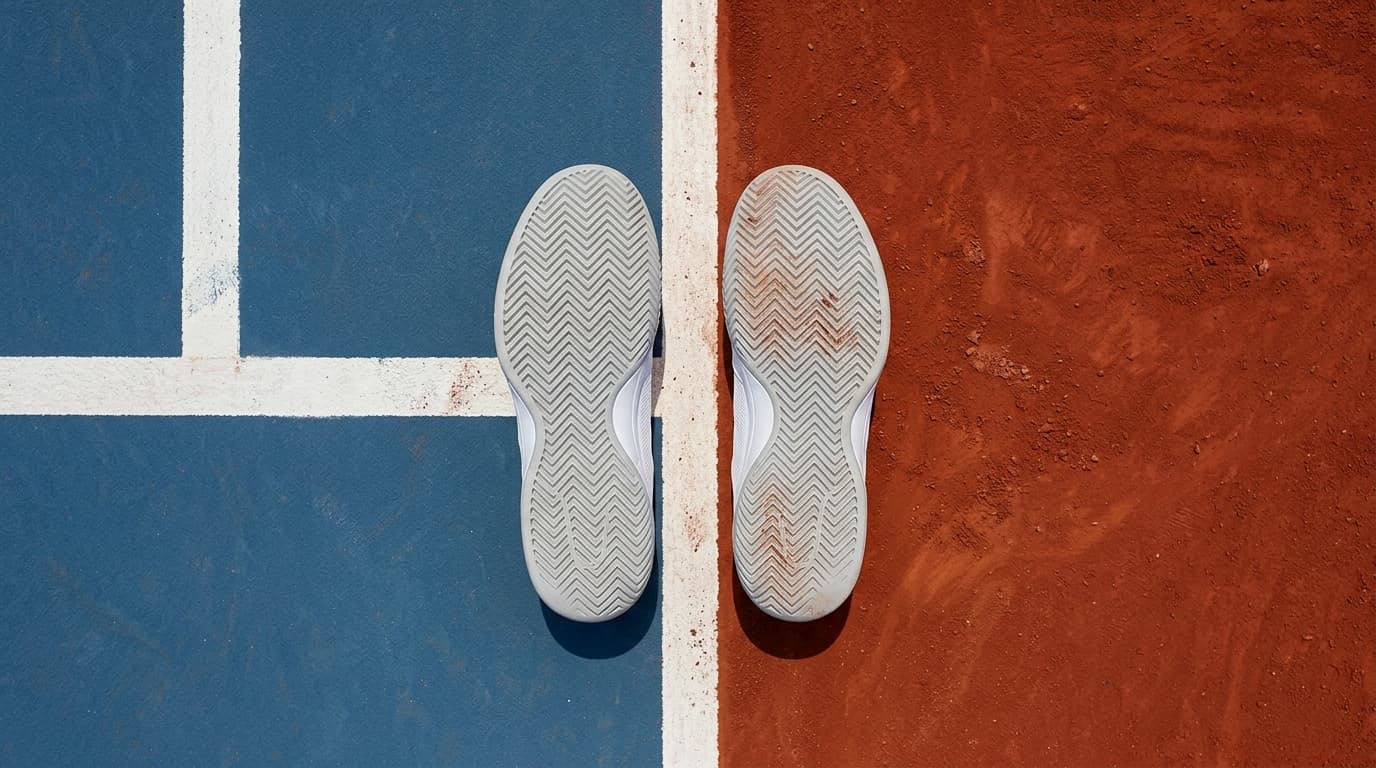
The difference between the first two rows comes down to the pattern. According to HEAD, clay shoes have deep herringbone across the whole outsole, which clears the clay, while all-court models have modified herringbone, rounder and shallower: versatile, but less effective on clay.
Carpet sets the strictest constraint. You need a fully smooth, tread-free, non-marking outsole, according to Decathlon Belgium. Too much tread gives too much grip: the foot locks and the risk of a sprain rises. TennisDirect.be even puts these models in a separate section, "tapijt", kept apart from hard court.
Do two pairs last longer than a single one?
Each one lasts just as long, and between them they cover twice as many hours. That is the whole calculation, and it changes how you look at the expense.
The AAPSM, the American Academy of Podiatric Sports Medicine, considers that the midsole of a tennis shoe is worn out after 45 to 60 hours of play. The USTA uses the same benchmark: at one hour a week, count on at least one pair a year.
Take an interclub competitor who plays four hours a week, training and matches included. He reaches 45 to 60 hours in 11 to 15 weeks. Over a year, he therefore wears out several pairs, whether he owns one or two at a time. Buying a summer pair and a winter pair does not make him spend more: he buys side by side what he would have bought one after the other.
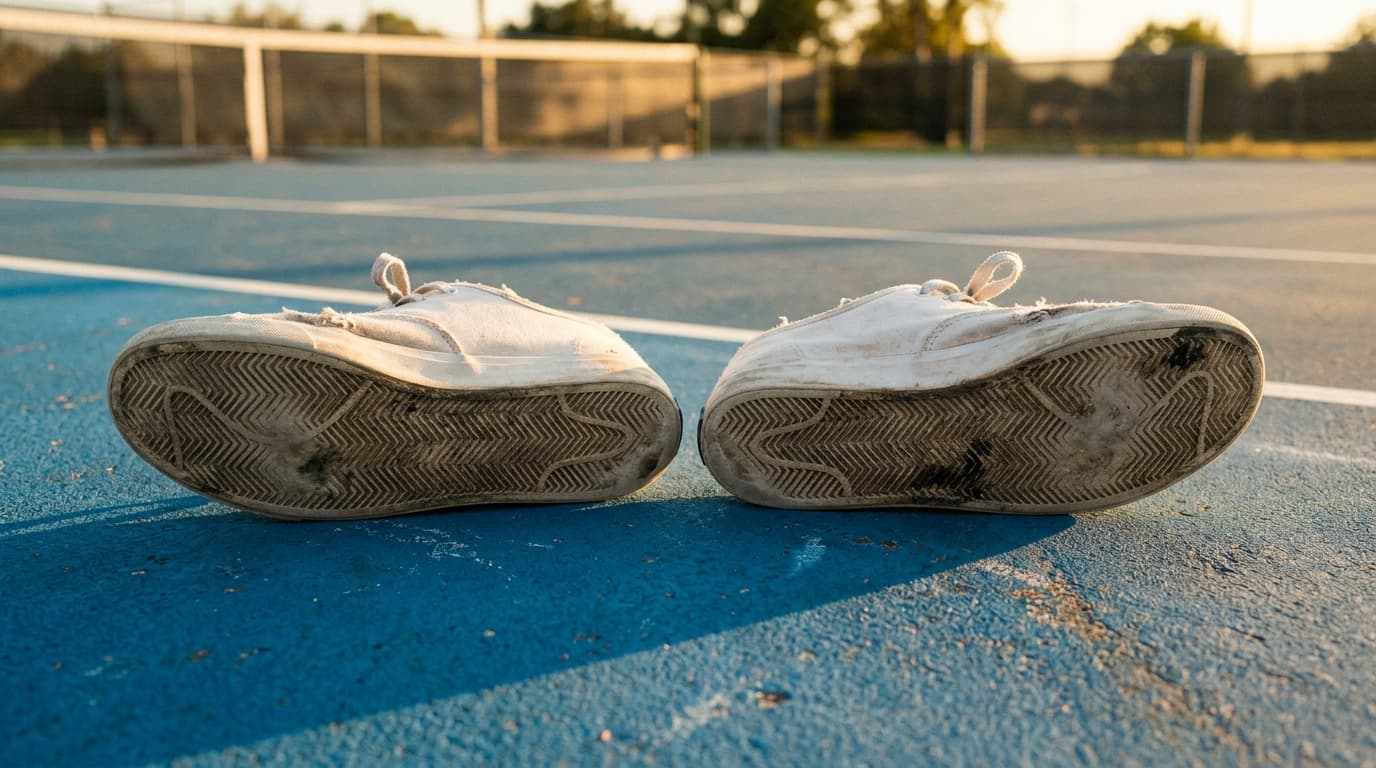
No pair is judged without the lifespan of its outsole, and the surface decides what gives out. On red clay, the rubber wears little: clay, softer, wears the outsole much less than hard courts, according to Tennis Companion. The summer pair almost always ends with its cushioning. On GreenSet, the forefoot rubber and the toe can give way before the foam, especially for a heavy player or one who slides.
Separating the two uses therefore protects the right part at the right time. You do not grind down your clay herringbone on a hard surface, and you do not compress the cushioning of your winter pair during the summer interclub matches.
One caveat. A pair does not keep indefinitely: the AAPSM points out that materials dry out and degrade even when unused, and advises replacing an athletic shoe that is more than a year old. A summer pair started in August and brought back out in April will have aged on the shelf. If you play little, finish it rather than store it.
Which shoes for summer on red clay?
A clay version, chosen on its grip and comfort more than on its rubber. On this surface, an outsole rated 7/10 for durability lasts as long as the cushioning.
That is what makes the Nike Vapor 12 logical in summer. Nike removed much of its rubber to make it lighter, according to the Tennis Warehouse review, and it only scores 7.2/10 for durability on our grid (compiled from published tests, not on-court trials). On red clay, this flaw matters little, and that leaves 9.4/10 for grip and 9.3 for lightness. It comes in a clay version and a hard court version.
The Nike GP Challenge Pro is the sensible option: around €97 recorded in Belgium, 8.8/10 for comfort, 8.6 for stability, and a clay version in the catalogue.
Outside Nike, the Adidas Barricade 14 comes in a clay version and scores 9.3/10 for stability. Its Lighttraxion rubber divides the tests on hard courts; on red clay, the question arises far less.
| Summer model | Version | Grip /10 | Durability /10 | Price recorded in Belgium | Estimated lifespan on red clay |
|---|---|---|---|---|---|
| Nike Vapor 12 | clay | 9.4 | 7.2 | around €159 | 45 to 60 h (cushioning) |
| Nike GP Challenge Pro | clay | 8.8 | 8.2 | around €97 | 45 to 60 h (cushioning) |
| Adidas Barricade 14 | clay | 8.8 | 7.0 | around €117 | 45 to 60 h (cushioning) |
Prices are averages recorded in Belgium between June and September 2026.
Which shoes for winter indoors?
It all depends on the floor of your indoor court, and the answer is not the same for GreenSet and for carpet.
On GreenSet, take an all-court version and put your best rubber on it. The Nike Vapor Pro 3 is the most direct choice: its Hart rubber covers the outsole up to the toe, it scores 8.6/10 for durability and RunRepeat rates that durability as "fantastic", wear zones included. It sells for around €117 in Belgium. The GP Challenge Pro in an all-court version, at 8.2/10, does the same job for €20 less. The Vapor 12 in a hard court version exists, but this is the floor where its lightened rubber shows soonest.
On carpet, you need a model made for it. The Asics Gel-Dedicate 9 is listed in a carpet version, for around €61 in Belgium. Its standard AHAR rubber only scores 5.8/10 for durability, but carpet is not hard court: the constraint there is the outsole pattern, not its thickness. Our product sheets do not list a carpet version for the Nike shoes cited here; check the title at the retailer before ordering.
Which tennis shoes last longest on hard courts?
Those whose rubber is rated 8.5/10 or more. At Nike: the Vapor Cage 4 (9.4/10, a generation that predates the 2025 models, whose availability in Belgium needs checking), the GP Challenge 1.5 and the Vapor Pro 3 (8.6). At Asics, the Gel-Resolution X (9.0).
The ranking of durable tennis shoes lists them in order. For your duo, remember the rule: the most durable rubber goes on the winter pair.
How much do two pairs cost, per hour of play?
Between €1.30 and €3.05 per hour depending on the duo. The price that matters is the price per hour of play, and it is calculated the same way for one pair or for two: the price divided by 45 to 60 hours.
| Duo | Summer (red clay) | Winter (indoors) | Total | Cost over 90 to 120 h |
|---|---|---|---|---|
| Low budget, carpet indoors | Nike GP Challenge Pro, around €97 | Asics Gel-Dedicate 9, around €61 | €158 | €1.30 to €1.75 per hour |
| Interclub, GreenSet indoors | Nike GP Challenge Pro, around €97 | Nike Vapor Pro 3, around €117 | €214 | €1.80 to €2.40 per hour |
| Attacking competitor, GreenSet indoors | Nike Vapor 12, around €159 | Nike Vapor Pro 3, around €117 | €276 | €2.30 to €3.05 per hour |
By way of comparison, a Vapor 12 worn alone all year works out at €2.65 to €3.55 per hour, and it will have spent the winter on the floor that suits it least. The middle duo costs less per hour and lasts twice as long.
This calculation assumes that each outsole lasts until its cushioning is done. That is almost a given in summer. In winter, on GreenSet, it is the durability score that guarantees it. The article on cost per hour of play applies the method to nine models.
How do you store the pair that is waiting for next season?
Clean, dry, away from heat.
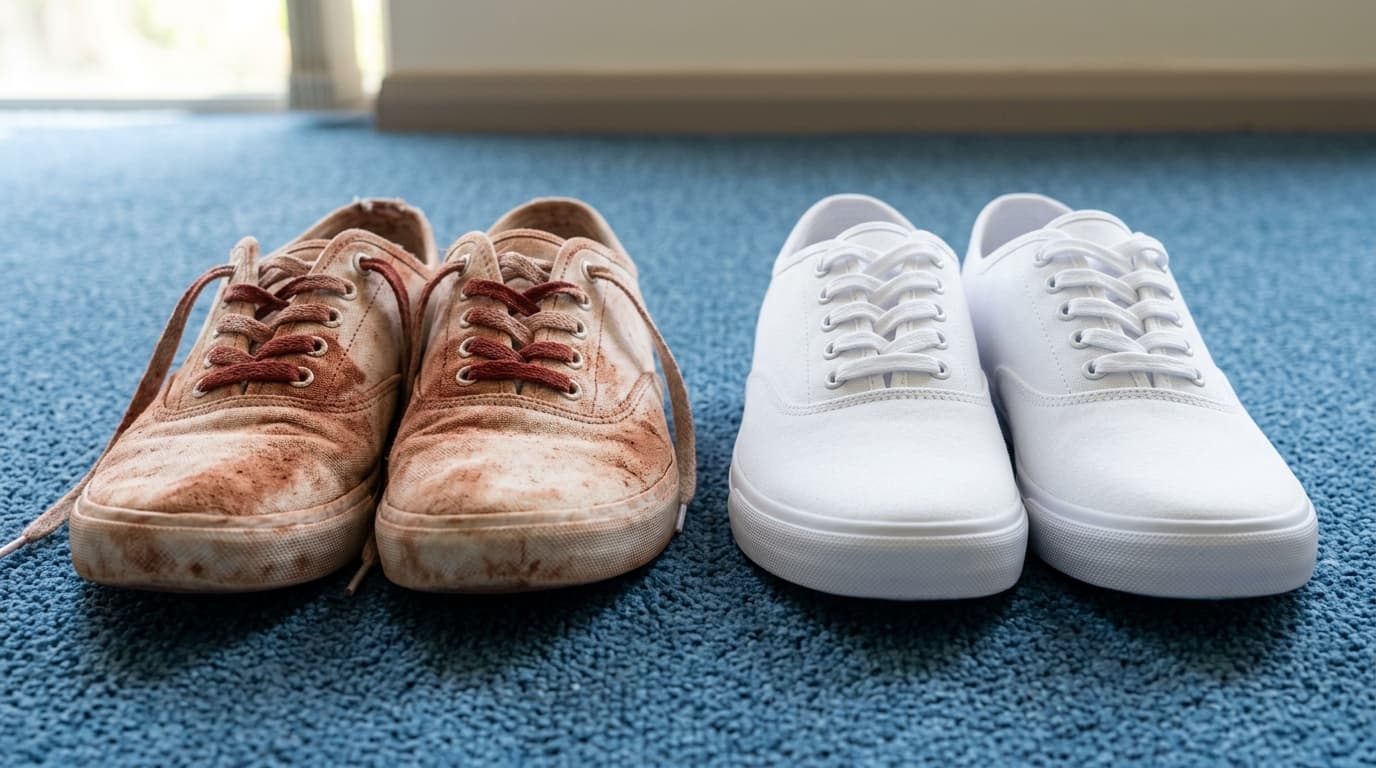
Asics advises against the washing machine, which shortens the lifespan, and recommends washing by hand with a soft brush. For drying, remove the insole, stuff the shoe with newspaper and keep it away from any direct heat source.
Alternating has another benefit, this time in mid-season. After intense effort, foam takes around 48 hours to decompress, according to Asics. A player who trains two days in a row is better off not putting the same pair back on.
The guide on how to care for your tennis shoes goes through these steps one by one.
To go further, the article on wear on clay and on hard courts explains why the rubber suffers mostly in winter, the one on how long tennis shoes last helps you count your hours, and the buying guide points you in the right direction for your profile. The summer models are listed in the ranking of clay court tennis shoes.
Sources
- RTBF, clay at the heart of Belgian tennis
- L'Avenir, a club under a dome in Walloon Brabant
- ITF, surfaces classified by pace
- HEAD, everything you need to know about clay court tennis shoes
- Decathlon Belgium, men's tennis shoes
- TennisDirect.be, carpet shoes
- Sportzorg, tennis shoes and court types
- AAPSM, When to replace athletic shoes
- USTA, when to buy a new pair of tennis shoes
- Tennis Companion, clay court tennis shoes
- Tennis Warehouse, Nike Zoom Vapor 12 review
- RunRepeat, Nike Vapor Pro 3
- RunRepeat, Nike GP Challenge Pro
- Tennis Companion, Adidas Barricade 14
- Asics, seven tips to make your shoes last longer
Your questions
Frequently asked questions
Can you play indoors with clay court shoes?
On carpet, no: you need a fully smooth, non-marking outsole, according to Decathlon Belgium, because too much tread locks the foot and raises the risk of a sprain. On GreenSet, a hard surface, it is possible as a stopgap, but an all-court version with durable rubber is better suited.
Which shoes for summer and winter interclub matches?
In summer, on red clay, a clay version: at Nike, the Vapor 12 (9.4/10 for grip) or the GP Challenge Pro, at around €97. In winter, on GreenSet, a durable all-court version such as the Vapor Pro 3 (8.6/10 for durability). On carpet, a model with a smooth outsole.
Which tennis shoes last longest on hard courts?
Those whose rubber is rated 8.5/10 or more for durability on our grid. At Nike, the Vapor Pro 3 and the GP Challenge 1.5 are at 8.6/10, the Vapor Cage 4 at 9.4. The Asics Gel-Resolution X is at 9.0. It is the winter pair that should carry this rubber.
Is one pair at €160 better than two pairs at €80?
Count per hour of play. Cushioning lasts 45 to 60 hours, whatever the price: a pair at €160 works out at €2.65 to €3.55 per hour, a pair at €80 at €1.35 to €1.80. Two pairs suited to your two surfaces last twice as many hours as a single one.
Does a pair stored all winter deteriorate?
Yes, a little. The AAPSM points out that foam and rubber dry out and degrade even when unused, and advises replacing an athletic shoe that is more than a year old. Better to finish your summer pair within the season than to keep it half worn for the following year.